New state, new rulebook. Dad's license costs about what Oklahoma's did and the boys are still free β but Enid has one rule that will bite us if we skip it: crappie under 12 inches go back. Checked against MDWFP and the Mississippi Administrative Code, October 11, 2026.
| Who | Needs | Cost |
|---|---|---|
| Dad β fishing every day | Nonresident annual freshwater license β two 3-days would cost $72.84, so the annual wins for $2.58 more | $75.42 |
| Mom β net-holder & photographer | Nothing (a 1-day license, $15.42, only if she wants a line in) | Free |
| All three boys (15, 14, 14) | Nothing β nonresidents under 16 are exempt | Free |
| Big brother, if he joins (21) | 1-day ($15.42) or 3-day ($36.42) | $15β36 |
Buy at licensing.outdoors.ms or the MDWFP HuntFish app before we leave (keep it on your phone) β or at any license agent (most Walmart sporting-goods counters). Prices include the agent fee and the $4.42 processing fee (base: $68 annual, $30 3-day, $10 1-day). There is no 7-day nonresident license. Questions: 1-800-5GO-HUNT.
Under 12" goes straight back. Daily limit 10 per angler, and a boat with 3+ anglers tops out at 25 combined. Bring a tape β "pretty sure it's twelve" doesn't count.
Below the dam: still 10 a day, but no size limit and no boat limit.
On the lake. On the rip-rap rocks of the spillway it drops to 1 pole per angler.
Not on the water, not in the ramp parking lot. Keepers ride on ice back to camp.
No trout-water rules here β barbed hooks, minnows, worms, stinkbait, all fine. (MDWFP suggests pinching barbs so short crappie survive release β good practice, not law.)
Crappie is Enid's only special regulation; every other fish follows the statewide rule. Sardis (pontoon day) has the same crappie rules as Enid. What you can keep, per person per day:
| Species | Keep per day | Size rule |
|---|---|---|
| Crappie (white + black) β Enid & Sardis | 10 (25 per boat, 3+ anglers) | 12" minimum (none in the spillway) |
| Black bass (largemouth + spotted + smallmouth) | 10 combined | none statewide |
| Bream (bluegill, redear & other sunfish) | 100 combined | none |
| Catfish (channel, blue, flathead) | no limit | none |
| White bass | no limit | none |
Practical translation: catfish and white bass are an all-you-can-catch buffet, bream are effectively unlimited, and crappie is the one fish where the tape measure matters.
Sources: MDWFP Enid Reservoir page (special regulations + weekly report, updated Oct 6, 2026), license requirements (under-16 nonresident exemption), license prices, statewide creel limits and the 2024 crappie rule β checked October 11, 2026.
Site 16 is lakefront β the best spot on the trip is twenty steps from the tent. Enid is a stained-water flood-control lake on its fall drawdown toward winter pool, so the fish are moving off the shallow flats and stacking on the channel edges, brush and the dam. Water level and spillway releases change the bite; the live numbers are at the bottom of this section.
Two catfish rods on bait in the rod holders, bells on, in front of the fire all evening. In between: a bobber with a minnow or a chartreuse jig for crappie, and crickets near any brush for bream. Night one, fan-cast the Deeper off the bank for 20 minutes to map the drop-off β that's where the bank fish live all week.
The outlet channel below the dam fishes best when some water is being released, but not too much. Crappie in the eddies and quiet water near the rocks (jigs or minnows), catfish in the pools, white bass on small crankbaits in the faster current below the waterfall, bass along the rocks, bream on crickets under a bobber. Remember: 1 pole each on the rip-rap, and no crappie size limit down here.
MDWFP's October 6 report: best crappie reports are from Point Pleasant to the dam, 12β16 ft deep, on jigs and minnows β trolled, drifted, or found with sonar. From the bank that means the deepest water you can reach near the dam end; from a boat it means slow drifts over the channel edge.
As the water cools they move up: topwater over flooded grass and creek-channel structure at dawn, then plastic worms, spinnerbaits or jigs on brush tops, stake beds and river-channel edges later in the day.
The boat comes from Sardis Lake Marina, one lake north. Same crappie rules as Enid. Full playbook below.
These are north Mississippi's famous crappie lakes β the world-record white crappie (5 lb 3 oz) came out of Enid in 1957. In October everything is feeding hard before winter. Crappie are the star of boat day: they school up (find one and you've found fifty), they hold in predictable spots, and the whole technique is "lower a bait straight down and wait." Nobody on this boat is a bad fisherman β some of us just haven't met a crappie school yet.
Species and techniques per MDWFP's Enid and Sardis fact sheets. Pontoon booking: Sardis Lake Marina, number on the directory.
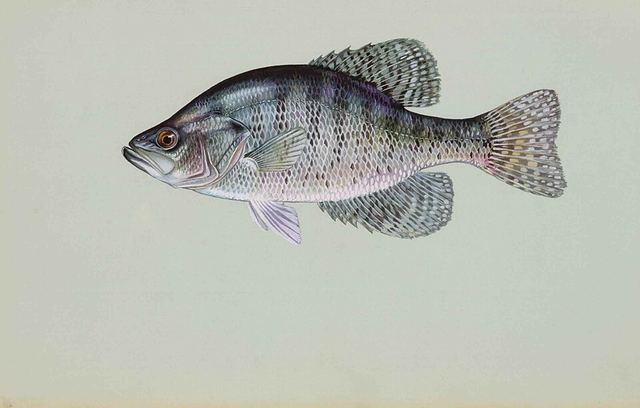
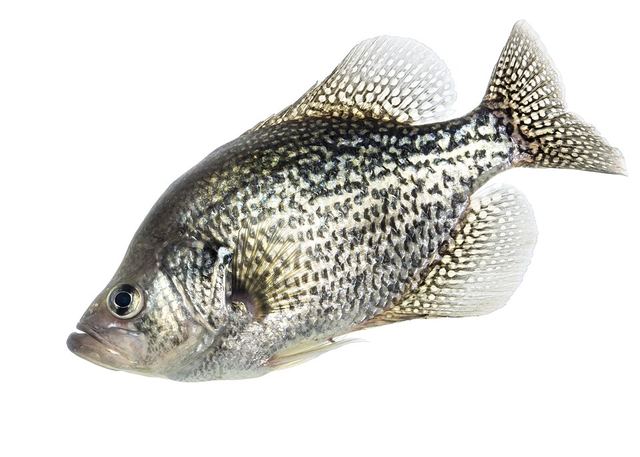
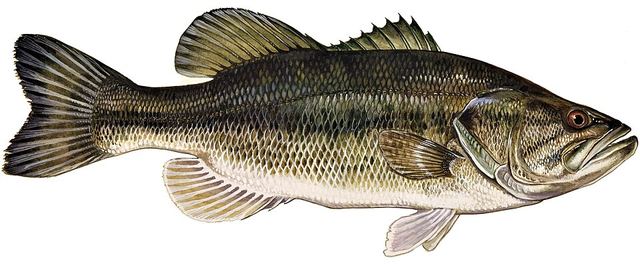
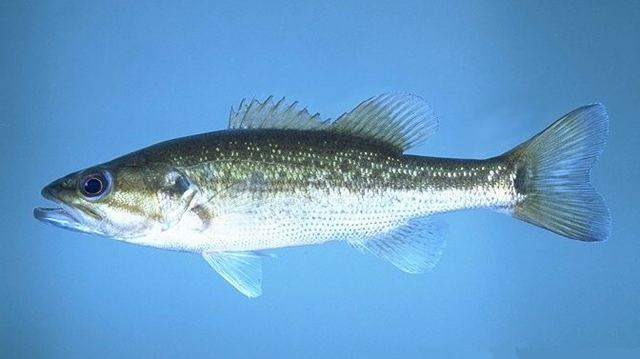
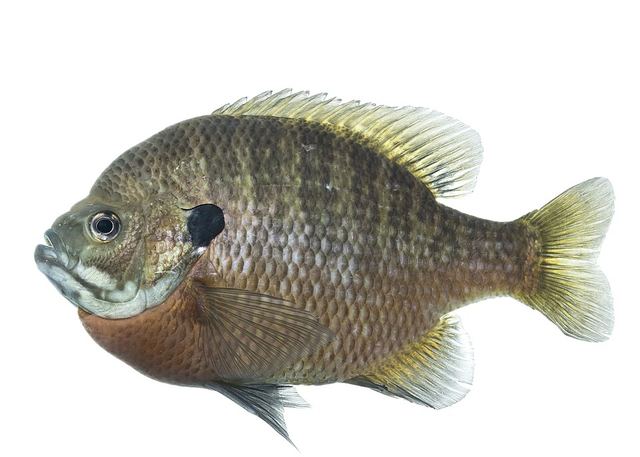
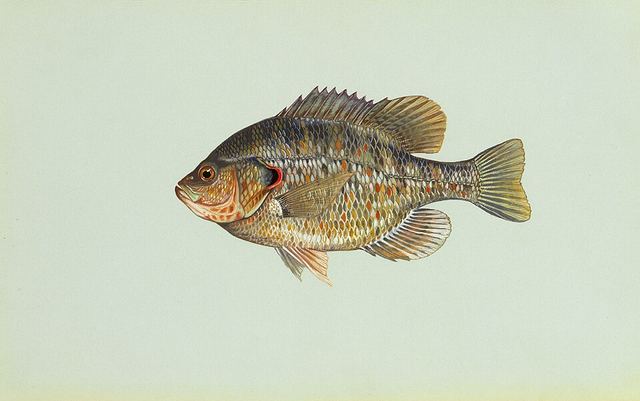
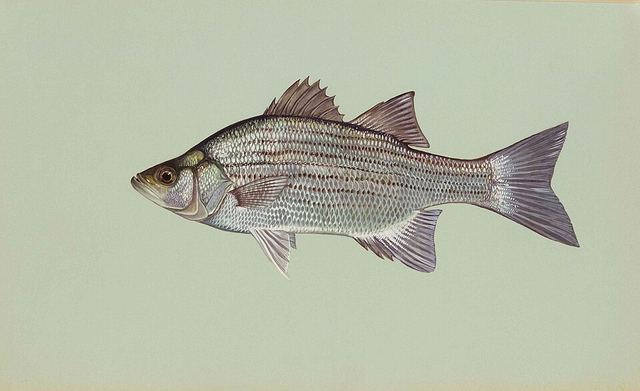
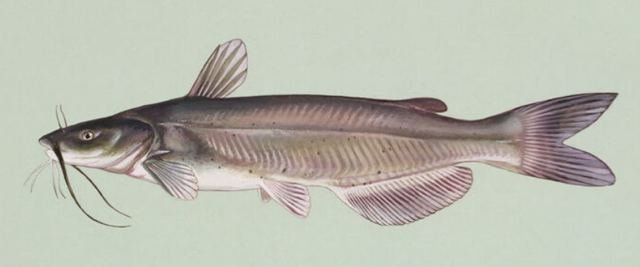
Eight fish, eight mugshots. Hold yours next to the phone, match the picture, check the one telltale mark β then log it in the journal before it flops back in.
Silver slab with faint vertical bars and 5β6 dorsal spines. The world record came from this lake. 12" to keep.
Speckled like cracked pepper, no bars, 7β8 dorsal spines. Same school, same rules, same fry pan.
Ragged dark stripe nose to tail, and the jaw hinges past the eye. The green football.
A largemouth's stripe broken into blotches, spot rows on the belly, jaw stops at the eye. Loves the spillway rip-rap.
Hand-sized; ink-black ear flap and a dark smudge at the back of the dorsal fin. Locals say "bream." The all-day bite.
A bluegill wearing red-orange trim on the ear flap. Locals say "shellcracker."
Chrome sides with lengthwise pinstripes; roams in schools and hits like it's mad at you. No limit.
Whiskers, deeply forked tail, freckles on silver. The bell-ringer on the bank rods. Mind the spines.
Portraits: mostly Duane Raver's classic paintings, plus U.S. Fish & Wildlife Service photos β all public domain. Blue catfish (no spots, straight-edged anal fin) and flathead catfish (flat head, jutting lower jaw) also live here; if it's huge and whiskered, take a photo before arguing about it.
The closed-face Zebco fleet comes as-is β it's perfect for this. What changes from the trout plan: heavier line, bigger hooks, bright colors, and real bait. Enid is stained water with brush and catfish, not a gin-clear trout stream. Restock at the Batesville or Oxford Walmart; live bait the day you fish.
The same trick from the trout plan still makes the week smooth: every rod gets a snap swivel on the main line, and everything else is a pre-tied leader that clips on. Snag in the brush? Switching from crappie to catfish? Unclip, re-clip, fishing again in half a minute.
Spool with 8β10 lb mono (6 lb on the Micro). Tie a snap swivel to the end of the main line β that's it. Leaders clip on and off; spinners don't twist the kids' line.
Bobber stop on the main line at 12β16 ft, bead, slip bobber, then a split shot and a lip-hooked minnow or a 1/16-oz jig + Baby Shad. Reel the stop onto the spool, cast, and the bait sinks to the exact depth. Bobber goes under β reel, don't yank.
Β½-oz egg sinker on the main line, bead, barrel swivel, 18" leader to a 1/0β2/0 circle hook. Nightcrawler gob, chicken liver or cut bait. Cast, set it in the holder, clip on the bell, sit down. When it rings, just reel β circle hooks set themselves.
Small fixed bobber, size 6β8 hook 4β6 ft under it, piece of nightcrawler or a cricket. Drop it next to any brush top or dock post. The strike is visible, which is exactly what young attention spans need.
1/16-oz jighead + chartreuse tube clipped to the snap swivel. No cast β lower it beside brush or over the channel edge, count it down to the school, hold on. Swap for a lip-hooked minnow when the jigs get the silent treatment.